The Fourth Straight Year: Why Employer Health Costs Keep Outrunning Budgets
The Fourth Straight Year: Why Employer Health Costs Keep Outrunning Budgets
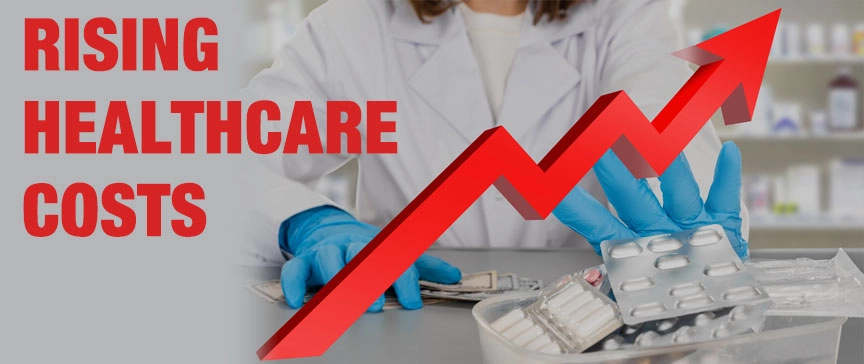
New projections from Aon put a hard number on something most business owners already feel in their gut: health care costs aren't leveling off. Aon expects employer health care costs to climb another 9.5% in 2027, pushing the average cost per employee above $19,000. That makes four consecutive years of cost trends hovering near double digits — one of the longest stretches of sustained health care inflation employers have faced in decades.
Employers Are Carrying More of the Weight
Here's the part that should get every owner's attention: employers are now absorbing more than 80% of total health plan costs. Employees aren't off the hook either — the average worker is projected to spend nearly $5,300 out of pocket on health care in 2026. Costs are rising on both sides of the equation at once, and there's no sign that's about to change.
What's Actually Driving the Increase
A few forces are compounding here. People are using more health care services than before, chronic conditions are becoming more common, and the number of high-cost claims keeps growing. Prescription drugs are a major piece of it too — specialty medications and the rapid expansion of GLP-1 therapies are adding real weight to plan costs, and that pressure is only expected to grow as new oral formulations and expanded clinical uses make these drugs available to more people.
Even the technology meant to make health care more efficient is adding cost in some cases. As providers lean on AI-assisted documentation and coding tools, billing has, in some instances, gotten more detailed — and more expensive.
Aon's own actuaries are blunt about what this means: at this level, rising health costs stop being just a line item and start shaping real decisions — benefits strategy, hiring, retention, and broader financial planning all get pulled into it. Their advice to employers is to get ahead of it: identify where the risk is building before it turns into next year's renewal shock, and lean on better data to make smarter decisions about where health care dollars are actually going.
Why "Better Data" Isn't the Whole Answer
That guidance is sound as far as it goes — but for most small and mid-sized employers, the bigger issue isn't a lack of data. It's a lack of room to maneuver. When four straight years of cost increases have already eaten into margins, there's less flexibility left to absorb whatever 2027 brings.
The businesses that handle a stretch like this well aren't necessarily the ones with the fanciest health care analytics. They're the ones that have already tightened up everything else — so a hard year in benefits costs doesn't turn into a crisis everywhere else too.
Where We Come In
This is the work we do at Chris Attaway Consulting. We help business owners find and correct the structural inefficiencies quietly draining profitability — through smarter payroll structuring that can increase employee take-home pay and reduce employer tax exposure, and through a free technology audit, done in partnership with Shiloh Code, that typically uncovers meaningful savings hiding in overlapping SaaS subscriptions and vendor-controlled infrastructure.
None of it requires blowing up what's already working. It's designed to work alongside your current broker, carrier, and payroll provider — the goal is more control and stronger margins, not more disruption.
If four straight years of rising health costs have you looking for real breathing room instead of another tough renewal conversation, let's talk.