The FTC is going after hidden health care fees. Here's why employers should care
Quick question. When was the last time you got a bill and actually knew what you were paying for?
If you run a business with a health plan, you're paying for hospital care whether you see the bill or not. It shows up in your renewal. It shows up in the premium. And a lot of it shows up in fees nobody explained to you in the first place.
So when Washington starts asking questions about hidden health care fees, I think employers ought to pay attention.
What's happening
The Federal Trade Commission recently sent warning letters to 24 health care companies. The message was pretty simple: if your cost disclosures are incomplete, inaccurate or late, that could violate federal consumer protection law.
In plain English? The government is telling parts of the health care industry that people deserve to know what something costs before they get the bill.
Most of us would call that common sense. In health care, it's apparently news.
Why a business owner should care
Here's the thing. Patients aren't the only ones who get surprised. Employers do too.
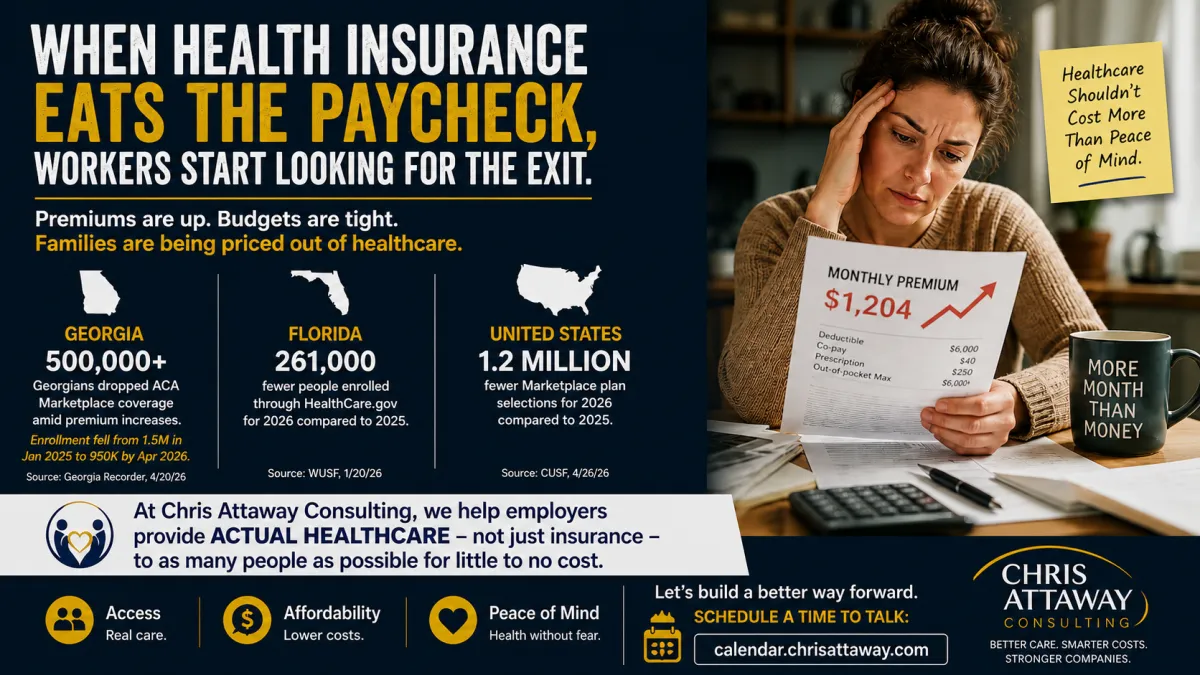
Every fee that slips through on a claim eventually rolls uphill. It lands in your claims experience, then in your renewal, then in your budget conversation next year. You didn't order the service. You didn't see the line item. But you're helping pay for it.
And your employees feel it twice. Once in their share of the premium, and again in deductibles and out-of-pocket costs when they actually use the plan.
Will more transparency help? I hope so. Sunlight usually does. But I wouldn't build next year's budget around the idea that a few warning letters are going to bend your cost curve.
The bigger point
Health care cost pressure isn't a one-year problem. It's structural. Prices go up, the fees get more creative, and the renewal comes back higher.
So what do most employers do? They pull the same few levers. Raise the deductible. Raise the employee contribution. Narrow the network. Switch carriers and hope.
How's that been working out?
Most of those fixes don't actually reduce the cost. They just move it. The business saves a little, and the employee picks up the difference out of their own paycheck. Then everybody wonders why it's so hard to keep good people.
I'm just a simple man, but that doesn't sound like a solution to me. That sounds like passing the plate to the folks who can least afford it.
A different approach
I'd rather fix the structure than keep treating the symptom.
What I help organizations do is look at how payroll is set up. There's a payroll-structuring strategy that layers on top of the benefits you already have. You keep your current carrier, your broker, your payroll provider and your plan. Nothing gets ripped out.
Done right, it can increase take-home pay for most employees and reduce the employer's payroll tax exposure. It works for any organization with W-2 employees, from a small shop to a government entity. How much it helps depends on the workforce, since the benefit hinges on each employee having enough tax savings. For most full-time employees, that's the case.
To me, that's what business financial freedom looks like. More margin. More control over costs you can actually control. And a better shot at keeping the people who make the place run.
Where the paycheck comes in
Here's the part I really like. When an employee's take-home pay goes up, that's not just a line on a pay stub. That's a little less stress at the kitchen table. A little more toward the credit card. Maybe the start of a real savings account.
That's the idea behind The Freedom Ledger: when the business gets healthier financially, the households behind it can too. If you're thinking about your own family's finances, that side of the conversation lives at freedom.chrisattaway.com.
Want to see what this could look like for your team?
In a free 15-minute call, I'll ask a few questions about your workforce and current setup and tell you honestly whether a deeper look makes sense. No pressure, and nothing changes with your carrier, broker or payroll company.
Book a strategy call or call or text me at 386.346.2683.
— Chris Attaway, Chris Attaway Consulting
This article is for educational purposes only and is not tax, legal or financial advice. Results depend on each organization's situation.